
Reynolds (Professional) Cornets

For the first 10-12 years of production, the Reynolds cornet was simply known as the "Reynolds Cornet". Various configurations of materials and finishes were available or, more likely, evolved over time, but it was still just Reynolds (along with Roth and Regent, which were the intermediate and student model lines available). When the Emperor and Contempora models were introduced in the late 1940s, the company began to refer to its original cornet as the "Professional" model, positioning it between the intermediate Emperor and artist-level Contempora horns. Multiple design options were still available, but now as different model numbers and eventually even different model names, as with the "Sterling" model.
The original F.A. Reynolds cornets were based on the “underslung” design of the “King” Master Model cornets that Foster Reynolds helped create in the 1920s and ’30s at the H.N. White Company. The King and Reynolds models are considered by many to be some of the most outstanding cornets available in the first half of the 1900s.
1936-1946
F.A. Reynolds (Cleveland, Ohio)
Model numbers and serial number dating are not available for this time period, making it difficult to accurately put together an exact production timeline. Because actual model numbers are not available, I've grouped the examples below by the physical materials of their construction -- primarily by which combination of parts were made of nickel silver and which were brass. The three parts that were variously available in nickel silver were the lead pipe, the balusters (upper valve casings) and the outer slide tubing at each valve tuning crook. I've identified four material combinations so far (Models A-D), each with either a brass bell or sterling silver bell. For consistency's sake, I am using the model number (60) that the Reynolds cornet was known with in the late 1940s.
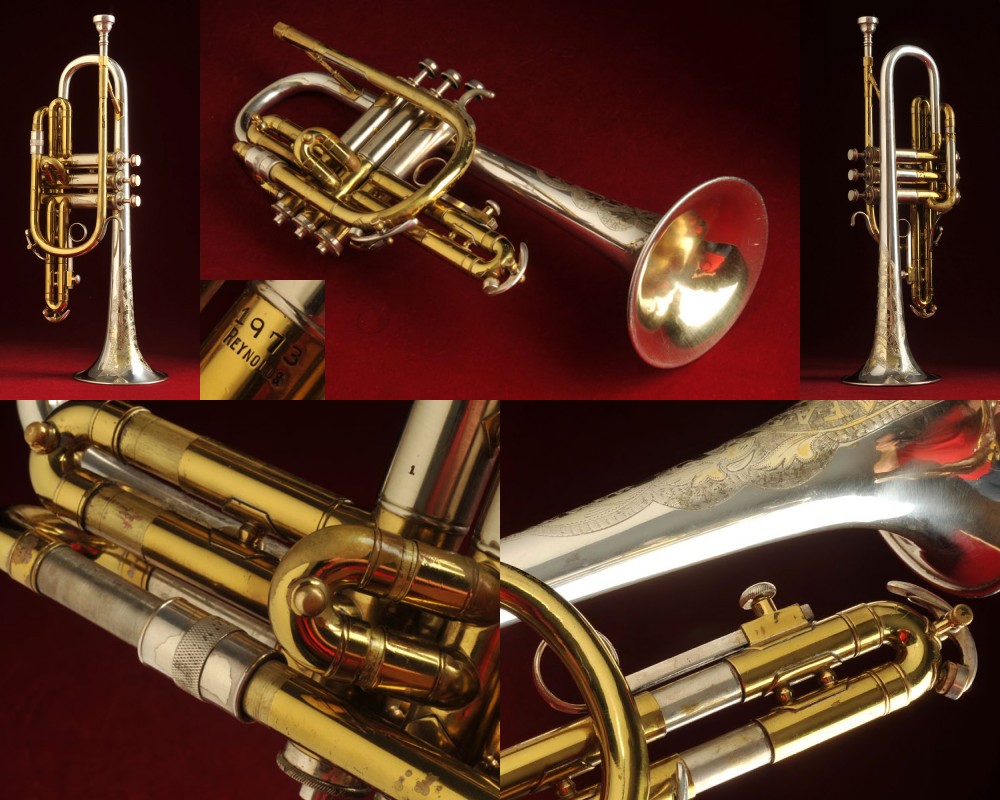
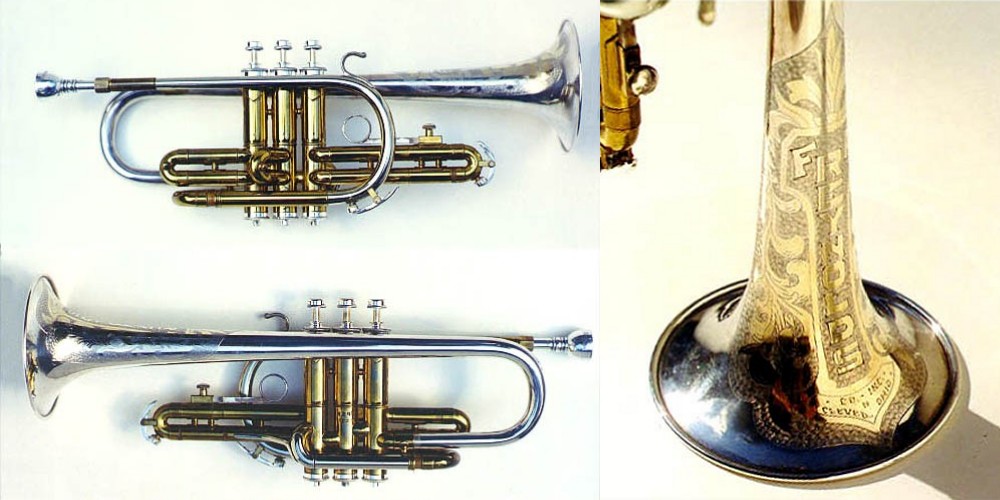
Cornets from Reynolds’ first decade of operations feature an ornate engraving pattern across the width of the bell flare. Both brass and sterling silver bells feature significant filigree with the latter adding inlay gold as well.
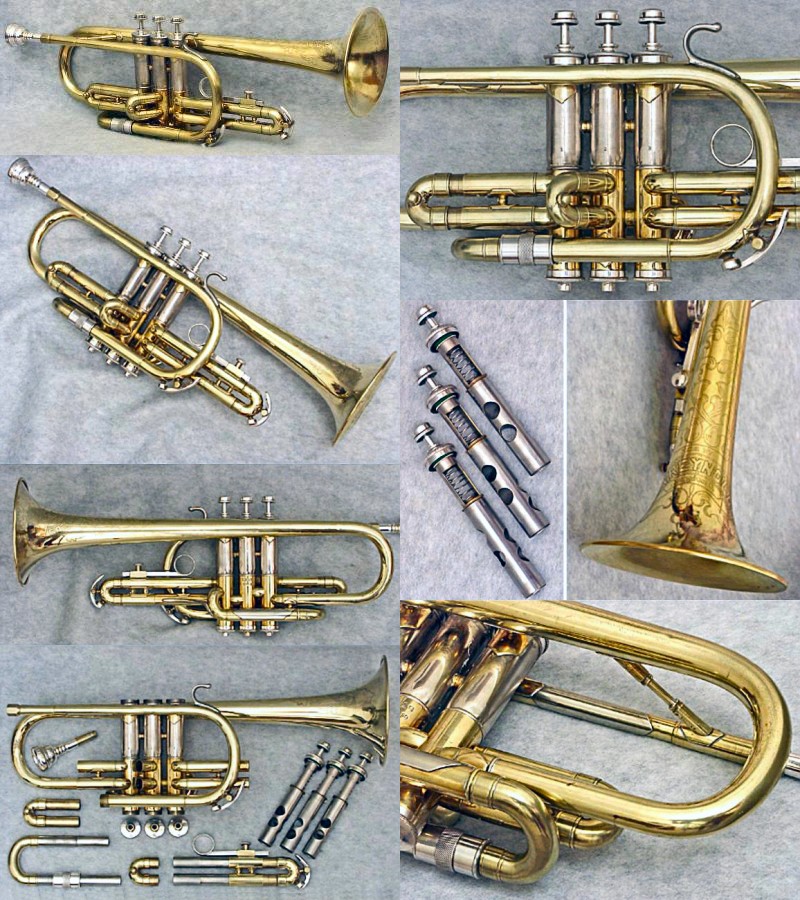
Model 60A
F.A. Reynolds cornet with B♭/A tuning ring
Bore: .458" Bell: 4¾" brass or sterling silver (with hand-burnished gold inlaid engraving) Materials: brass with nickel-silver upper valve casings (balusters) Valves: top-loaded, inner-spring, solid nickel-silver valve pistons Finish: polished brass with clear lacquer finish
60A with brass bell (c.1937)
60A with sterling silver bell (c.1938)
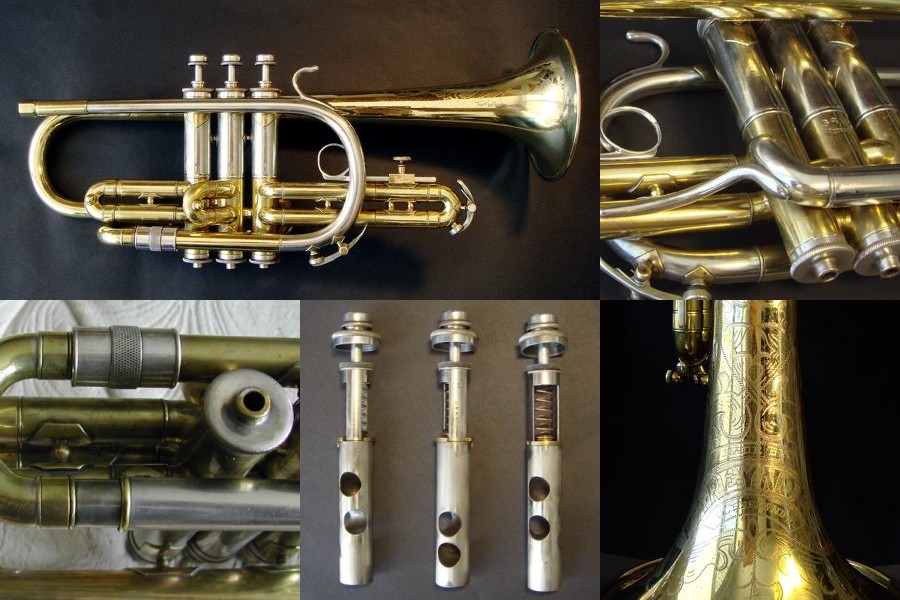
Model 60B
F.A. Reynolds cornet with B♭/A tuning ring
Bore: .458" Bell: 4¾" brass or sterling silver (with hand-burnished gold inlaid engraving) Materials: brass with nickel-silver leadpipe and upper valve casings (balusters) Valves: top-loaded, inner-spring, solid nickel-silver valve pistons Finish: polished brass with clear lacquer finish
60B with brass bell (c.1940)
60B with sterling silver bell (c.1939)

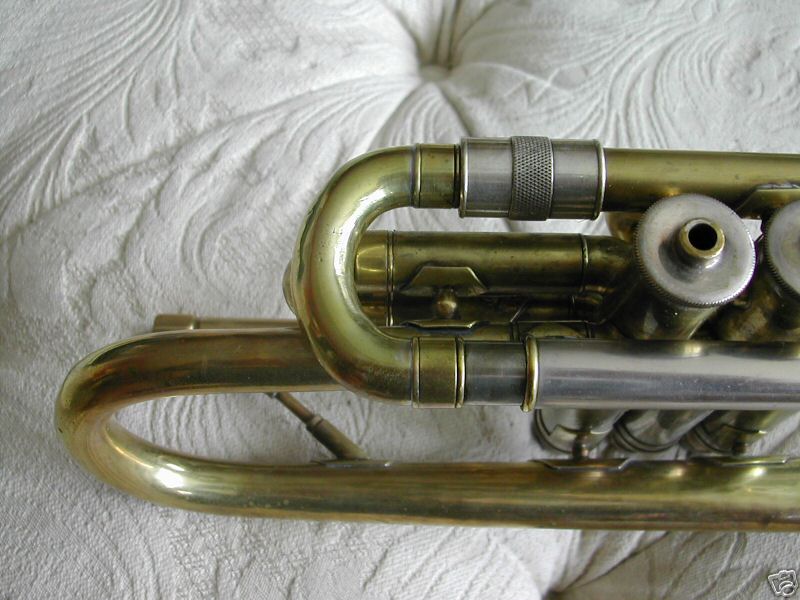
As far as I am concerned, [the] design in the bringing of the tuning slide underneath the valve block to the back side of the third valve is unequaled genius. It is much more comfortable to my left hand, as the heel of my palm rests on the lead pipe, keeping me from pronating my left hand, and by getting both the tubing and the heel of the palm out of the way, the left hand fingers are not cramped in working the 1st & 3rd valve slides.
It also feels more balanced and not bell heavy or top heavy as the center of gravity is lowered on the horn, making it easier to hold. Moreover, the common sense expedient of the little extra medallion of brass on the ferrule and knuckle going into the valve block as a protection against dents has the positive effect of damping non-harmonic vibrations, helping the cornet retain center of pitch better.
Model Note
Models before serial number 5000 featured an adjustment ring on the main tuning slide for “quick change” B♭/A tuning. This is a feature that Foster Reynolds undoubtedly carried over from his work at H.N. White, where a similar tuning ring had been featured on the King “Master Model” cornet.
World War II
F.A. Reynolds Co. was awarded at least three separate contracts for band instruments by the United States Army Quartermaster between 1943 and 1945. The contracts totaled nearly $200K ($3M in 2022) and allowed the relatively new company to continue focusing on instrument production when many more-established manufacturers, e.g., F.E. Olds and Conn, were forced to shut down instrument lines and produce wartime equipment.
Details of each contract are not available, and it is not specified which service bands received the instruments, though anecdotal evidence suggests that the bands of the U.S. Army Air Forces (USAAF) were recipients, having just organized in 1941. These instruments have a silverplate finish with unique engravings and a large "U.S." mark near the rim of the bell.
F.A. Reynolds Cornet with USAAF military engraving and B♭/A tuning ring (c.1941)
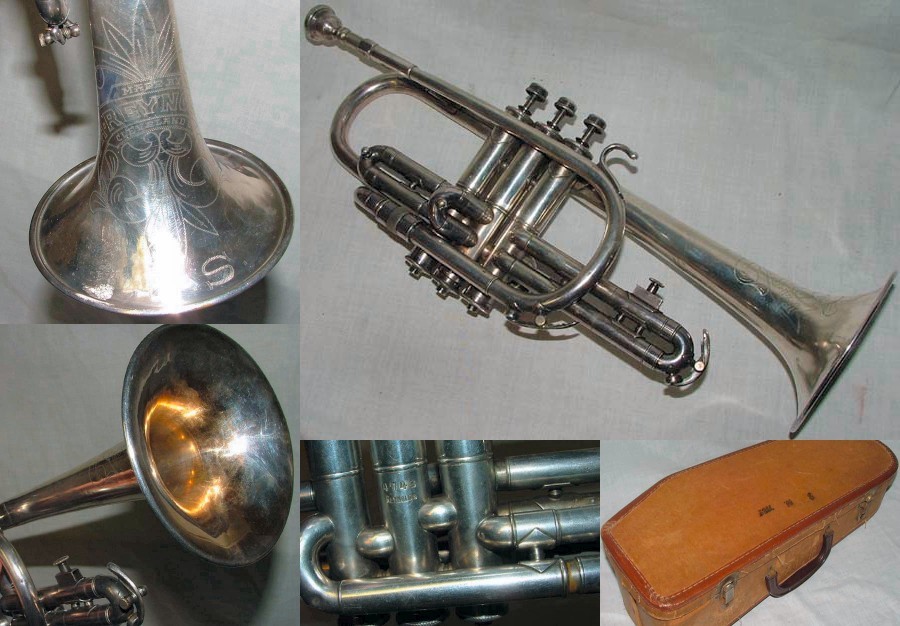
F.A. Reynolds Cornet with USAAF military engraving (c.1948)
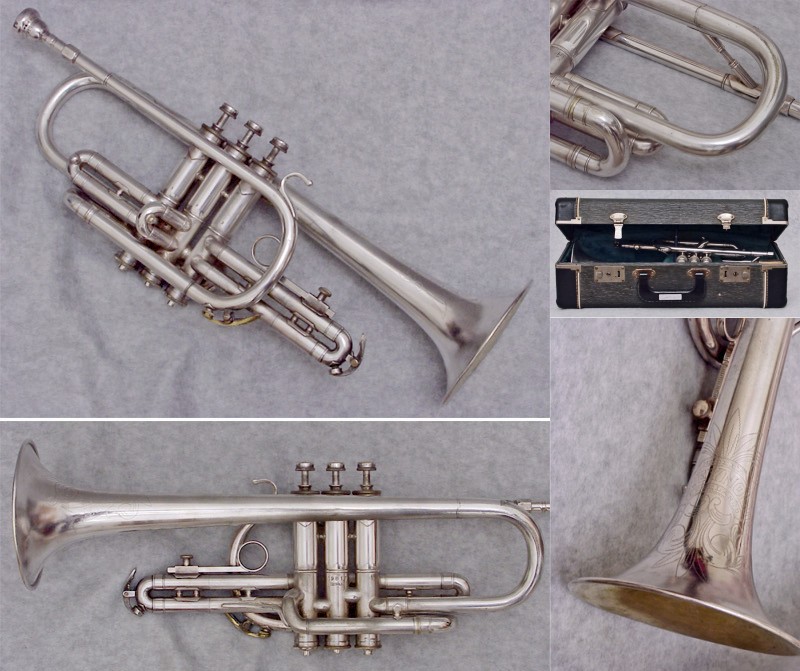
1946-c.1949
F.A. Reynolds, division of Scherl & Roth (Cleveland, Ohio)
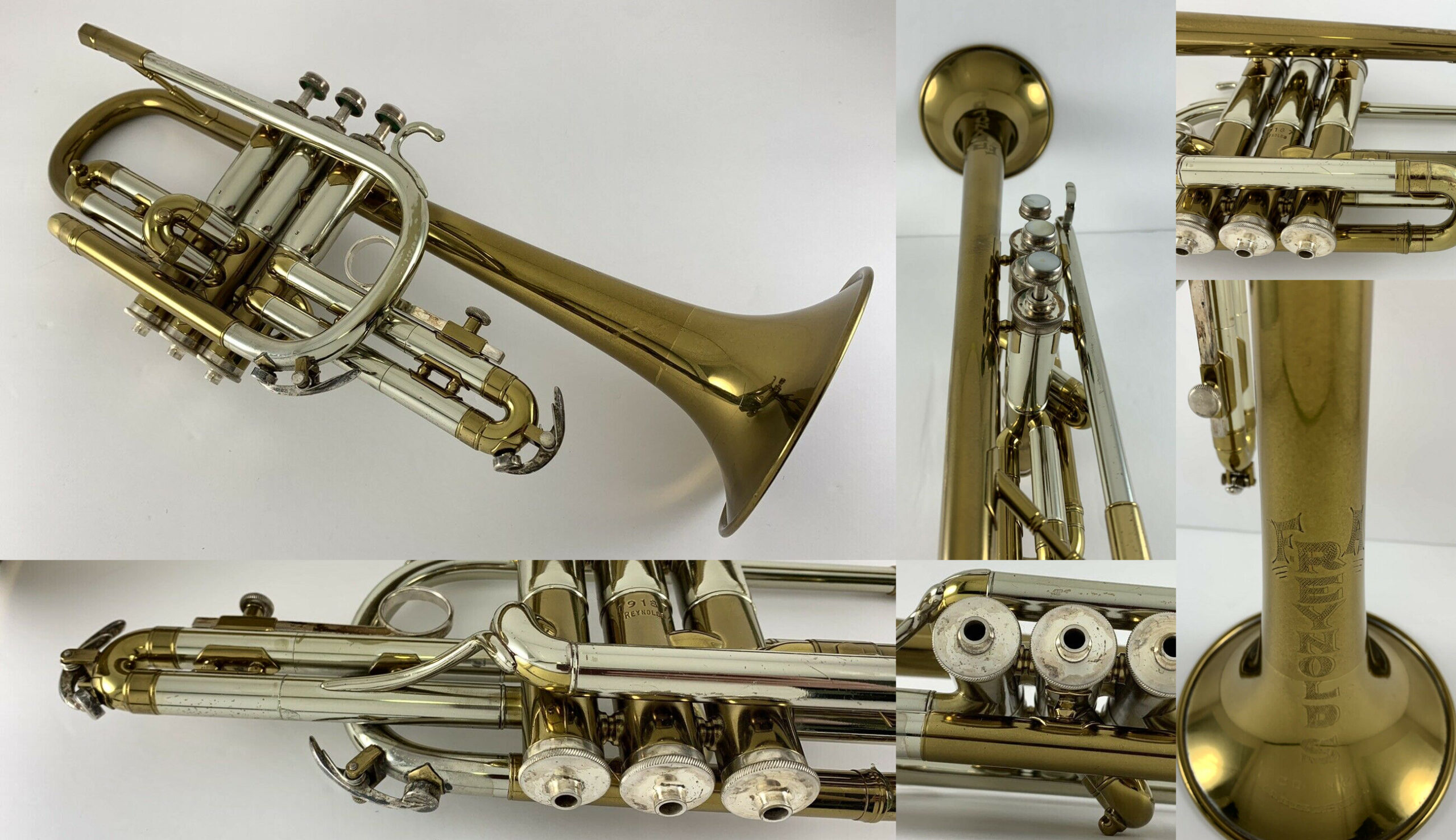
After Scherl & Roth took over operations in 1946, it appears that the engraving pattern changed to a vertical block lettering style. The brass bells were much simpler in style than the sterling silver bells and would not have required as much “finishing” time on the production line. The change in engraving patterns happened around SN 9000.
Model 60B
F.A. Reynolds cornet
Bore: .458" Bell: 4¾" brass or sterling silver (with hand-burnished gold inlaid engraving) Materials: brass with nickel-silver leadpipe and upper valve casings (balusters) Valves: top-loaded, inner-spring, solid nickel-silver valve pistons Finish: polished brass with clear lacquer finish
60B with brass bell (c.1940)
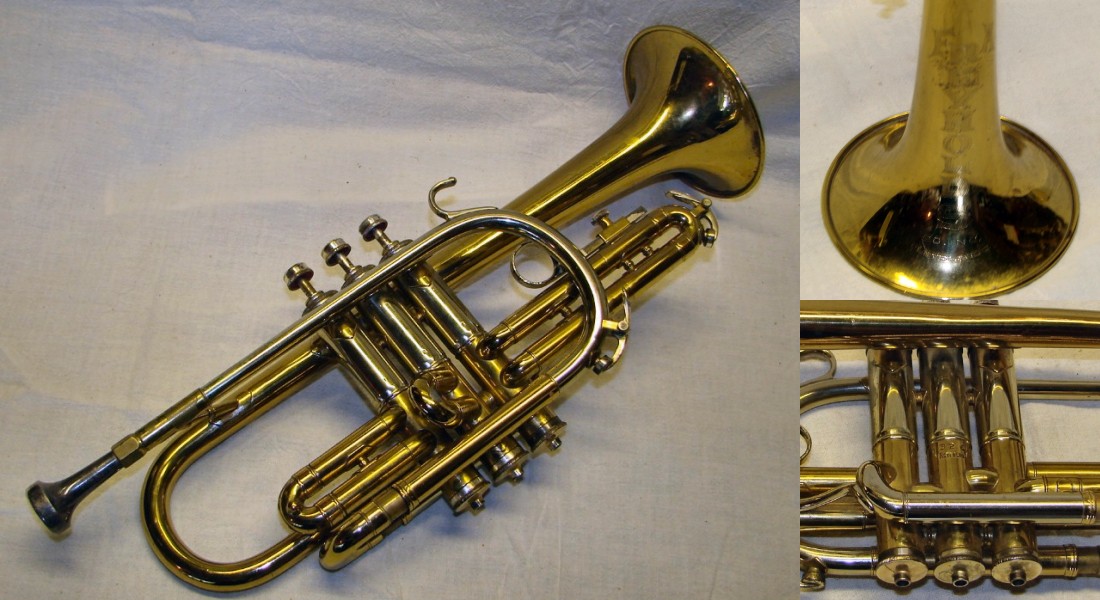
60B with sterling silver bell (c.19##)
Model 60C
F.A. Reynolds cornet
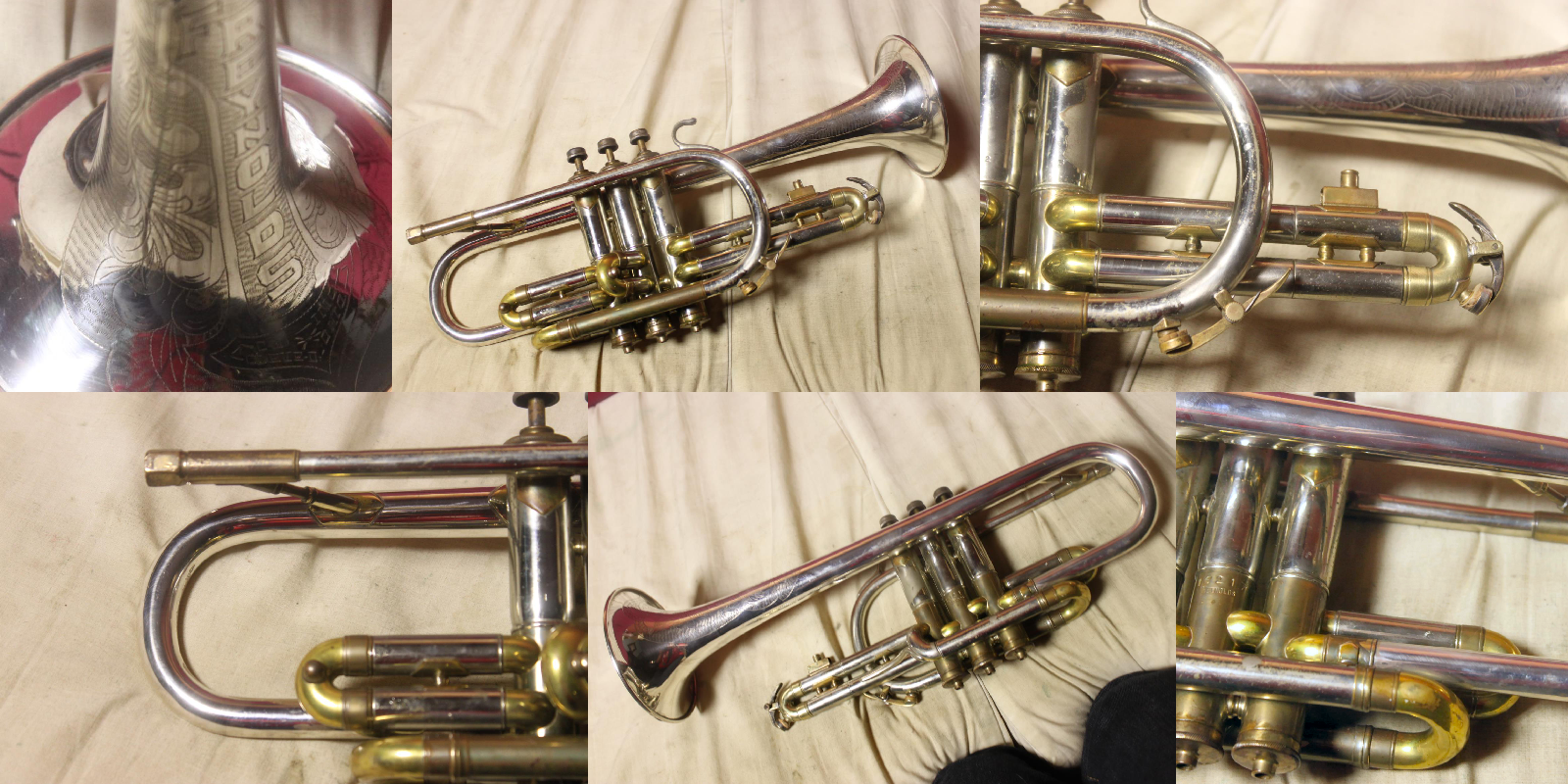
Bore: .458" Bell: 4¾" brass or sterling silver (with hand-burnished gold inlaid engraving) Materials: brass with nickel-silver lead pipe Valves: top-loaded, inner-spring, solid nickel-silver valve pistons Finish: polished brass with clear lacquer finish
60C with brass bell (c.1946)
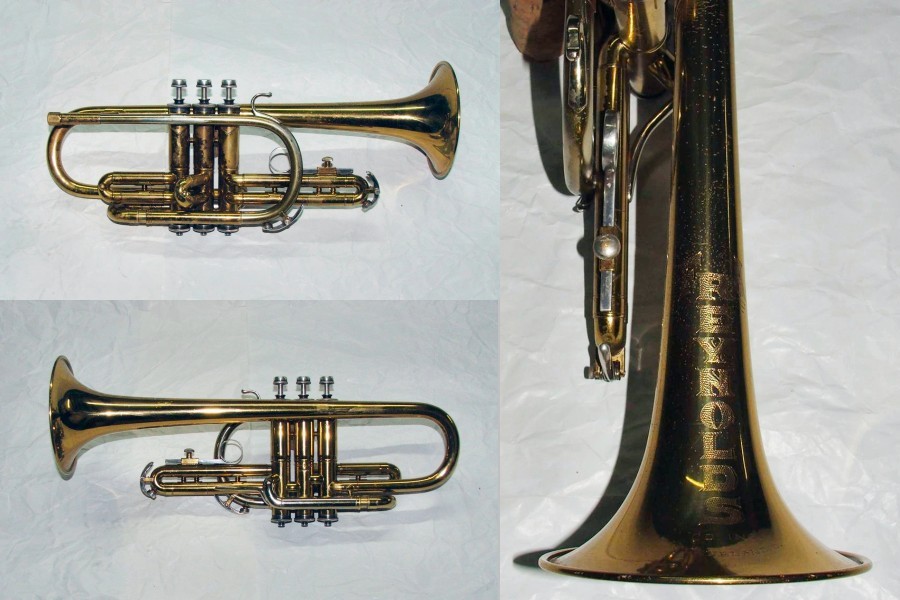
60C with sterling silver bell (c.1946)
Model 60D
F.A. Reynolds cornet
Bore: .458" Bell: 4¾" brass or sterling silver (with hand-burnished gold inlaid engraving) Materials: brass with nickel-silver lead pipe, upper valve casings (balusters) and outer slide tubes Valves: top-loaded, inner-spring, solid nickel-silver valve pistons Finish: polished brass with clear lacquer finish
60D with brass bell (c.1949)
60D with sterling silver bell (c.1948)
c.1949-1952
F.A. Reynolds, division of Scherl & Roth (Cleveland, Ohio)
Circa 1949, there were minor design changes made to F.A. Reynolds cornets: while the overall design and bell engravings remained the same, the updated models can be distinguished by their lower profile valve buttons and flat bottom valve caps. Serial number 21000 marks the approximate change to the updated design. In conjunction with these changes, the Reynolds cornet was designated as the “Professional” model.
Of the different variants listed above, only [D] appears to have been retained, now Models 60 and 61.
Model 60
Reynolds "Professional" cornet
Bore: .458" Bell: 4¾" brass Materials: brass with nickel-silver lead pipe, upper valve casings (balusters) and outer slide tubes Valves: top-loaded, inner-spring, solid nickel-silver valve pistons Finish: polished brass with clear lacquer finish

Model 61
Reynolds "Professional" cornet
Bore: .458" Bell: 4¾" sterling silver (with hand-burnished gold inlaid engraving) Materials: brass with nickel-silver lead pipe, upper valve casings (balusters) and outer slide tubes Valves: top-loaded, inner-spring, solid nickel-silver valve pistons Finish: polished brass with clear lacquer finish
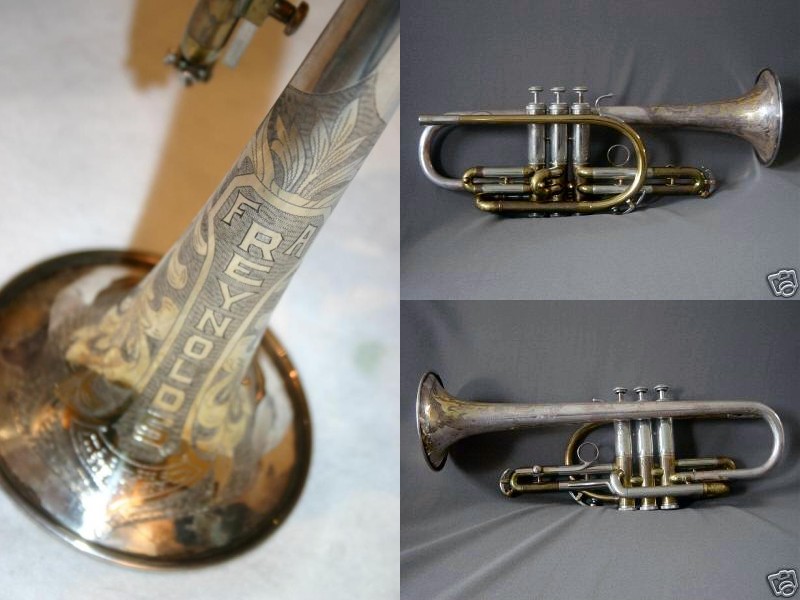
Note: example photo is shown with brass leadpipe; according to the seller’s notes, this is a replacement of the original nickel-silver leadpipe.
Here is a truly noble instrument, handsomely designed, rich looking, beautifully balanced, with marvelous intonation, and the most responsive valve action you ever felt. Altogether a cornet which the most artistic soloist will love to play ... and which will greatly help to improve the performance of lesser cornetists.
1952-1961
Roth-Reynolds (Cleveland, Ohio)
Reynolds cornets made c.1952 and later are marked “Made by Roth-Reynolds” instead of “F.A. Reynolds”. In addition, the main bell engraving changed to a lengthwise script that simply says “Reynolds”. Serial number 30000 marks a general introductory point of these changes.
Reynolds continued to offer a sterling silver bell option throughout the 1950s and early ’60s. The basic sterling silver bell (model 63) had an added “Sterling” word engraved below the large “Reynolds” script, while the deluxe engraving style (models 61, 62) added the fancy filigree and hand-burnished gold inlay that set those models apart. The latter does not appear to have added the “Sterling” designation.
Reynolds Professional Cornets and Trumpets have been the choice of discriminating musicians for over two decades. Graceful design and famous free-blowing qualities distinguish the ‘Professional’ models. Instant valve response with solid nickel silver pistons. Built with either brass bell or beautifully finished sterling silver bell. All models equipped with deluxe Gladstone cases.
Model 60
Professional cornet
Bore: .458" (medium) Bell: 4¾" brass Length: 17½" Materials: brass with nickel-silver lead pipe, upper valve casings (balusters) and outer slide tubes Valves: top-loaded, inner-spring, solid nickel-silver valve pistons Finish: polished brass with clear lacquer finish
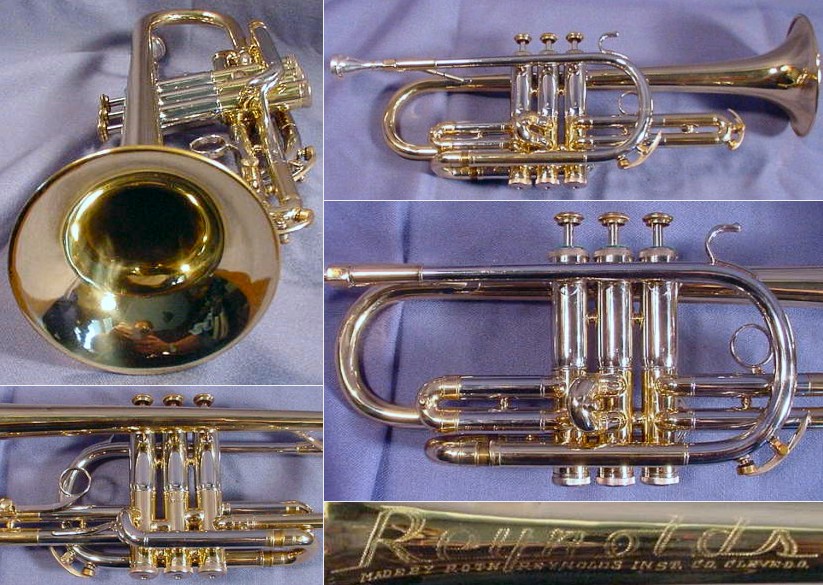
Note: Model 60 last appears in the 1958 catalog. The large-bore "Hi Fi" model takes its spot in 1959.
Model 61 (61-M)
Professional "Sterling Deluxe" cornet
Bore: .458" (medium) Bell: 4¾" sterling silver (with hand-burnished gold inlaid engraving) Length: 17½" Materials: brass with nickel-silver lead pipe and outer slide tubes Finish: polished brass with clear lacquer finish
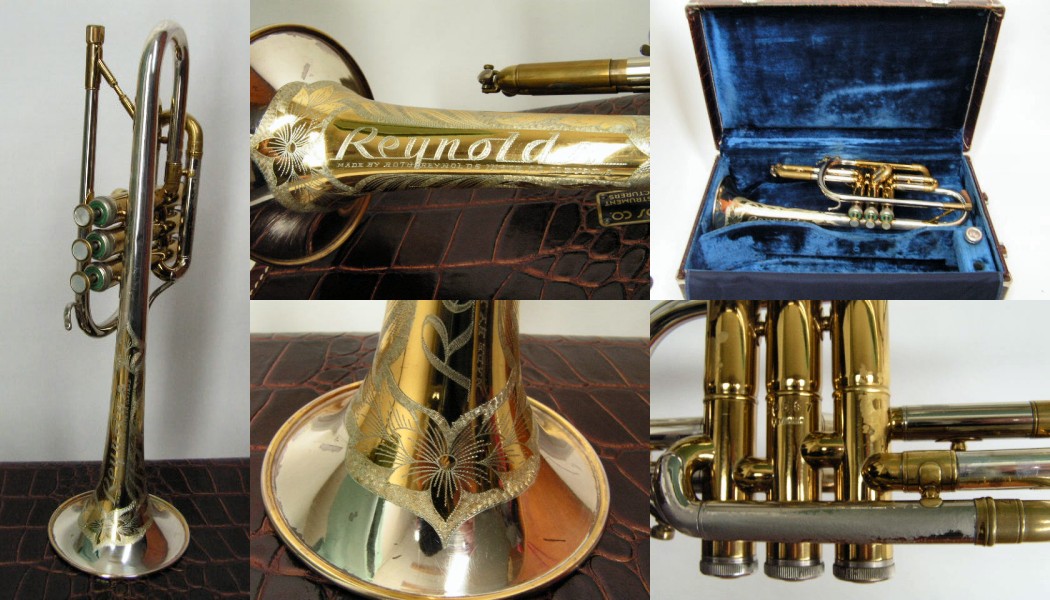
Model 61-L
Same as Model 61-M with .462" large bore
Note: the large-bore option first appears in the 1959 catalog
Model 62 (62-M)
Professional "Sterling Deluxe" cornet with first-valve trigger
Bore: .458" (medium) Bell: 4¾" sterling silver (with hand-burnished gold inlaid engraving) Length: 17½" Materials: brass with nickel-silver lead pipe and outer slide tubes Finish: polished brass with clear lacquer finish
Model 62-L
Same as Model 62-M with .462" large bore
Note: the large-bore option first appears in the 1959 catalog
The most beautiful cornet made. Favorite of famous artists for many years: Dr. Frank Simon, Col. Irons and many others. The PROFESSIONAL cornet possesses tone qualities ideal for solo or ensemble. Fast, solid nickel silver pistons of perfect fit and a correctly tapered bore produce a rare combination of perfection. […] All models equipped with Gladstone cases.
Model 63
Professional "Sterling" cornet
Bore: .458" (medium) Bell: 4¾" sterling silver Length: 17½" Materials: brass with nickel-silver lead pipe, upper valve casings (balusters) and outer slide tubes Valves: top-loaded, inner-spring, solid nickel-silver valve pistons Finish: polished brass with clear lacquer finish
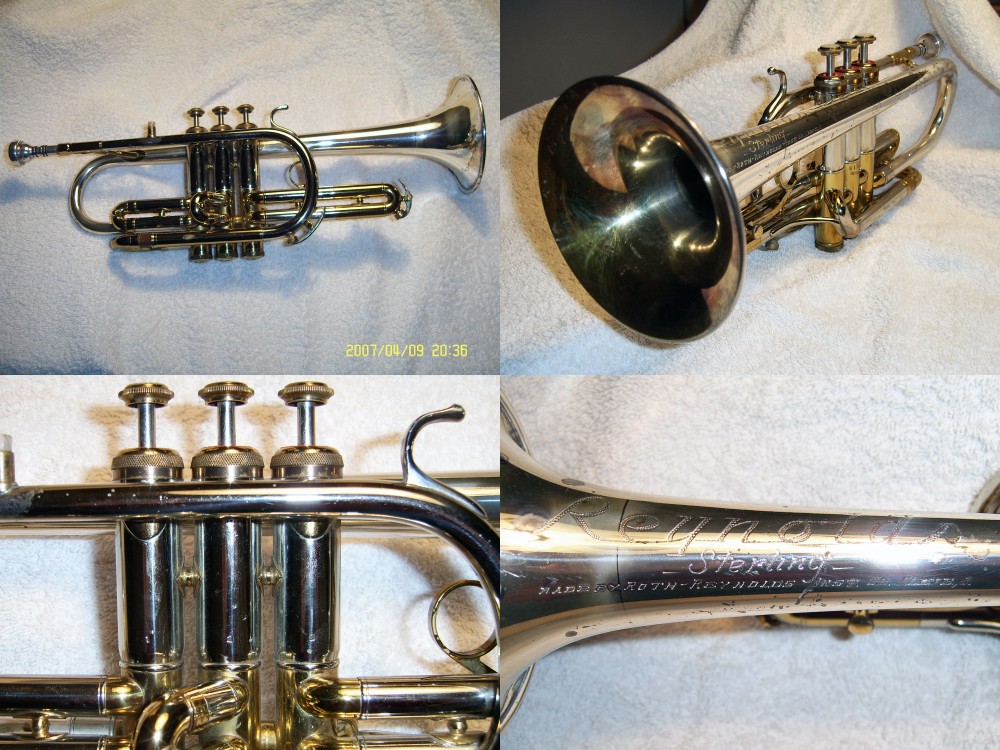
1961-1964
RMC/Reynolds (Cleveland, Ohio)
Sometime after Richards Music purchased Reynolds in 1961, the product catalog was renumbered. The old numbers were replaced with a new scheme that reflected the type of instrument. To the best of knowledge, the instrument specifications did not change, just the model numbers.
The Professional models were dropped from the catalog sometime during the RMC period. While they do not appear in a 1963 (possibly '62) product catalog, there are earlier (1961-62) examples of the model with the RMC bell engraving.
Model CR-??
Previously Model 62; Professional "Sterling Deluxe" cornet with first-valve slide trigger
Bore: .458" (medium) Bell: 4¾" sterling silver (with hand-burnished gold inlaid engraving) Length: 17½" Materials: brass with nickel-silver lead pipe and outer slide tubes Finish: polished brass with clear lacquer finish
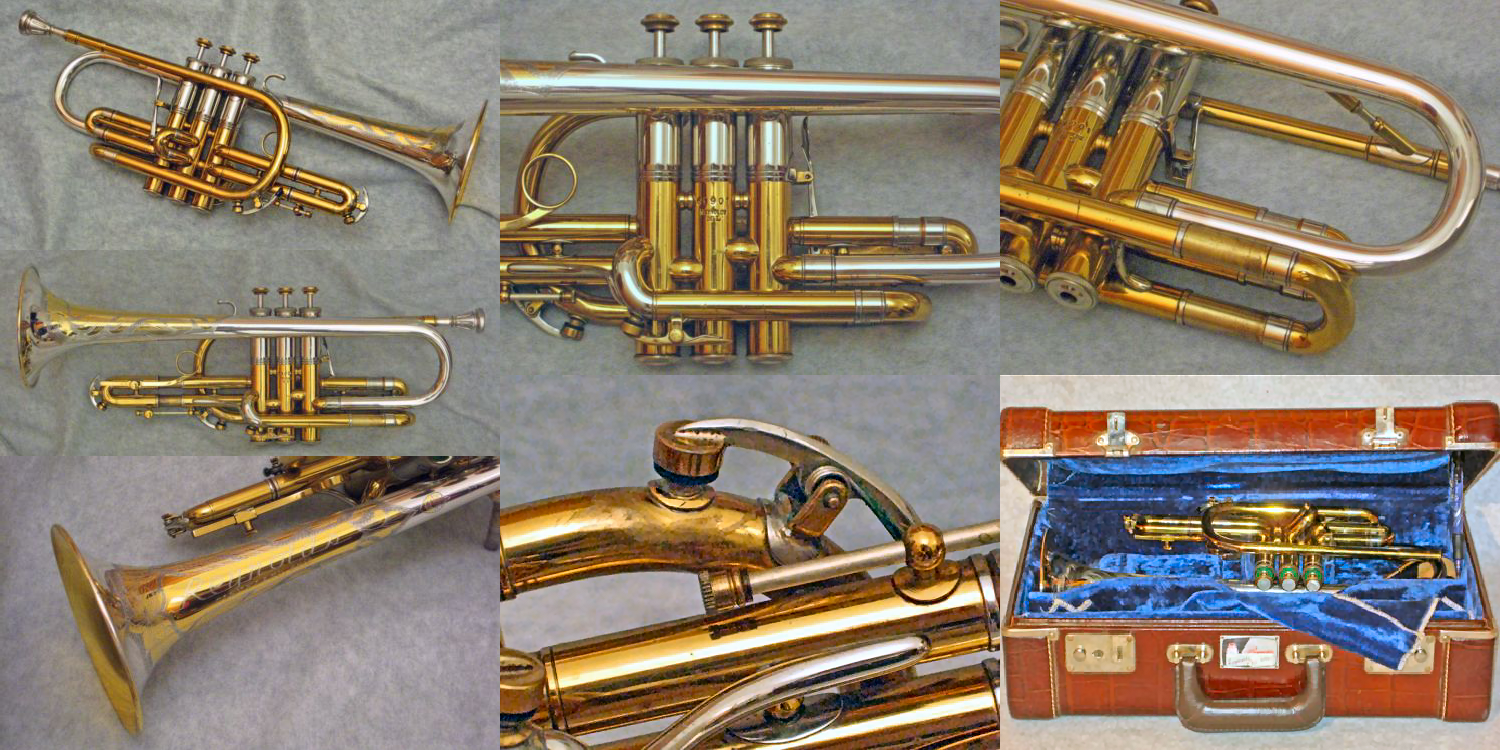
The purpose of this website is to preserve the history of the F. A. Reynolds Company and the distinctive qualities of its brass instruments. Contempora Corner and contemporacorner.com are not related or associated in any way to the former or current F.A. Reynolds Company.
Copyright © 2004-2025 ElShaddai Edwards. All Rights Reserved. Terms of Use.